Maria-Theodora Folina at CERN

Maria-Theodora Folina

I am a Technical Student in the Software Frameworks and Tools group (EP-SFT) at CERN, working on reproducible software stacks for LHC experiments. In March 2027 I will join the Automatic Control Laboratory at ETH Zurich as an SNSF-funded NCCR Automation fellow, hosted by Dr. Efe Balta in the group of Prof. John Lygeros.

I am also an MSc student in Systems Engineering and Technology at Democritus University of Thrace. I graduated as valedictorian from the University of Macedonia in Computer Science and was awarded a scholarship by the State Scholarships Foundation (IKY). I have collaborated with the LIGO Scientific Collaboration, Aalborg University and several EU-funded projects.

Research

I work on trustworthy machine learning for science. I start from reproducibility, treating it as something measurable and optimisable, and then work on machine learning for scientific data in general, especially Earth observation: geometric and operator-based models, uncertainty quantification and verifiable guarantees. A question I keep returning to is what a given set of sensors can and cannot recover, and where the next measurement should go, from partially observed water networks to sparse ocean and satellite data.

I am interested in where these models break, in extreme and transient events, sensor drift and missing data, and in how their results are used. I want evidence derived from scientific and satellite data to be auditable and contestable in policy and governance.

Selected Work Experience & Education Talks Publications Awards Teaching & Service

Selected Work

Maria-Theodora Folina
CERN48th CERN School of Computing, 2026  [slides] [CDS] [CDS internal note] Also available on the CERN Document Server.
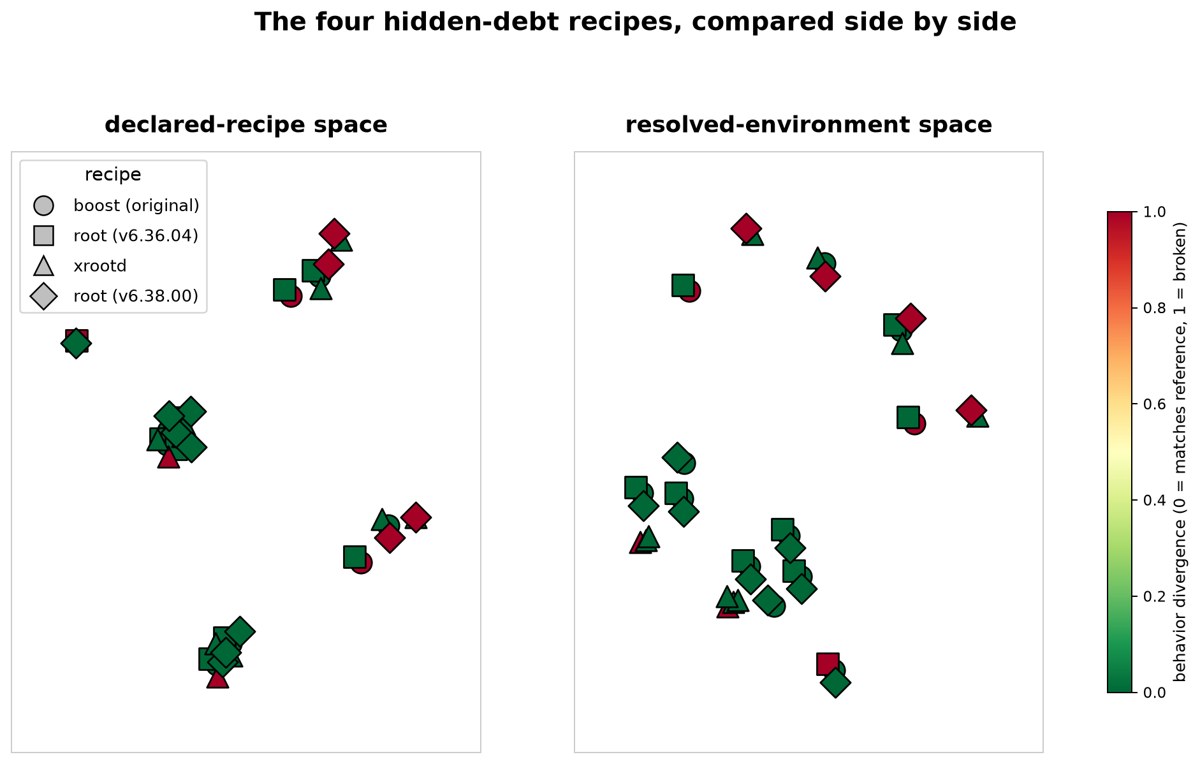
A Reproducibility Debt Index that measures how far identical build recipes diverge across compilers, operating systems and deployments, evaluated on real CERN CI data.
Embeddings of hidden-debt software recipes coloured by behavior divergence
Maria-Theodora Folina, Shantanusinh Parmar, Marco Cavaglia
CERNAI for Gravitational Waves Workshop @ CERN, 2026  [poster]
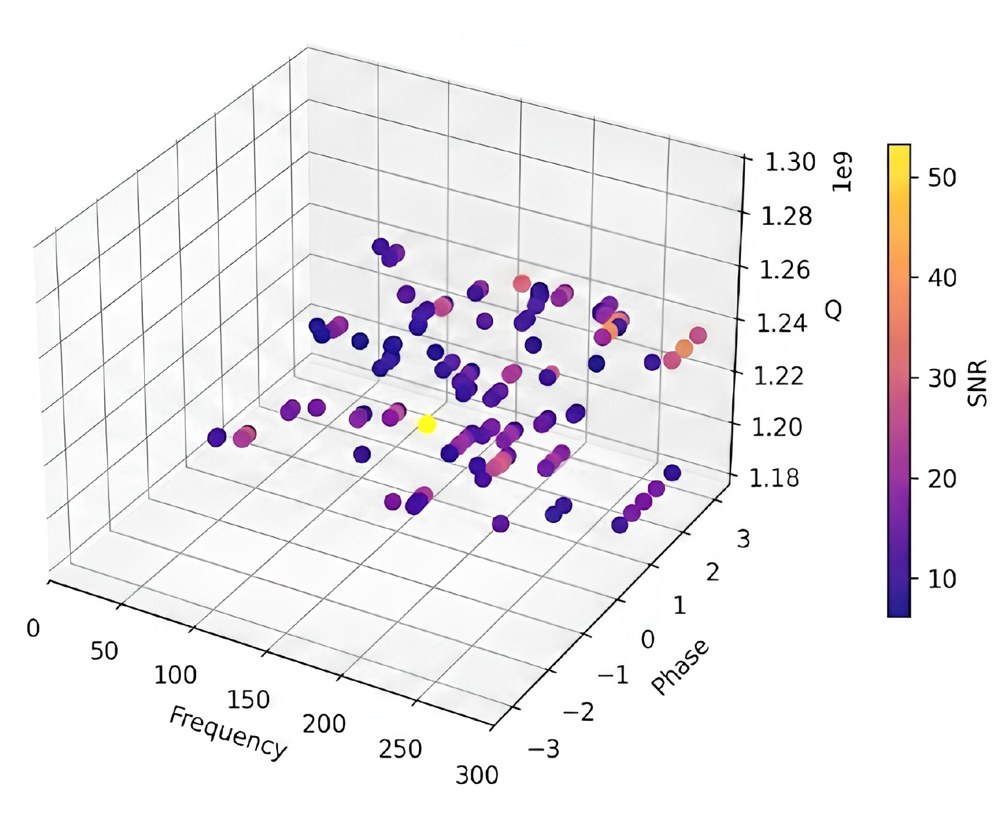
Point-cloud and LSTM models that classify transient noise bursts in LIGO data beyond 1D and spectrogram methods.
3D point cloud of LIGO glitches
Geometric AI for Climate-Resilient Heritage: Riemannian Trajectory Learning for Predictive Monitoring
Maria-Theodora Folina
Imperial College LondonLOGML 2026, Imperial College London  [poster]
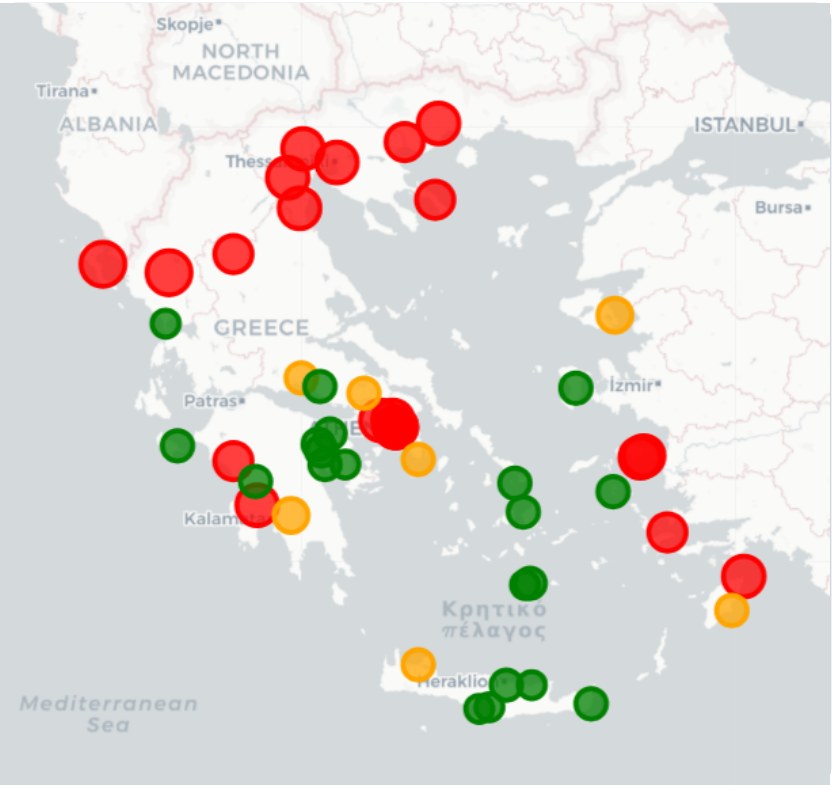
Environmental change at 49 Greek heritage sites as a trajectory on the SPD manifold, forecasting 12-month degradation (held-out R2 = 0.753).
Map of Greece with predicted environmental pressure per heritage site
Towards an Explainable AI Framework for Quantifying Air-Sea CO2 Fluxes: Multi-Sensor Satellite Data Fusion with Knowledge Graph Representation
Maria-Theodora Folina, Dimitrios Folinas, Ioannis Kostavelis
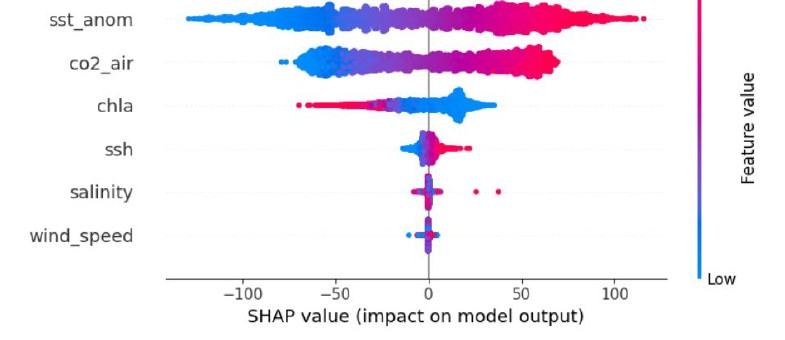
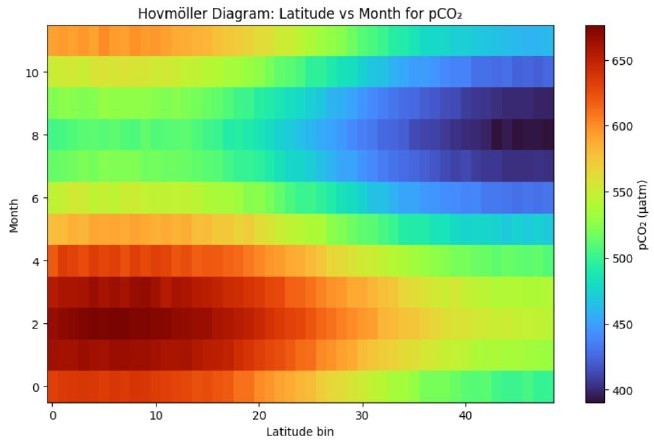
Copernicus Sentinel-3 and MetOp observations of sea-surface temperature, chlorophyll-a, height and wind are fused with sparse in-situ SOCAT pCO2 measurements on HPC to predict and explain air-sea CO2 flux over the North Atlantic, using XGBoost, SHAP attribution of the physical drivers and a Carbon Knowledge Graph. The 2023 marine heatwave case study identifies uncertainty in extreme events as the open gap.
SHAP summary plot of drivers of air-sea CO2 flux
Hovmöller diagram of pCO2 by latitude bin and month
Not Observed Is Not Calm: Where Open Sensors Go Blind and How to Verify Alerts for C2 (in preparation)
Maria-Theodora Folina
NATONATO ICMCIS 2027 (manuscript in preparation)  [alert-check viewer] [code]
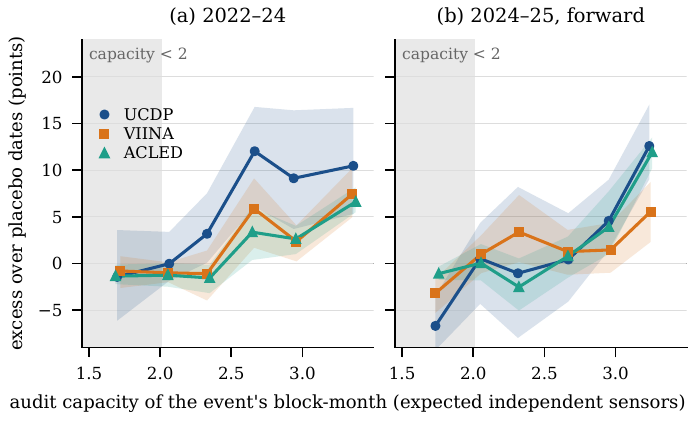
An observability audit of satellite-derived fire alerts: the expected number of independent sensors able to see an event shows where open sensors go blind, with events leaving no thermal trace where it is lowest. Tested on 9,038 labelled alerts over Ukraine in two periods and with three event sources, and used in the Petrov Layer, an advisory verification layer with conformal thresholds and self-describing evidence records. Includes an open viewer for checking alerts against Sentinel-2 imagery.
Excess of VIIRS detections over placebo dates by audit capacity, for UCDP, VIINA and ACLED events
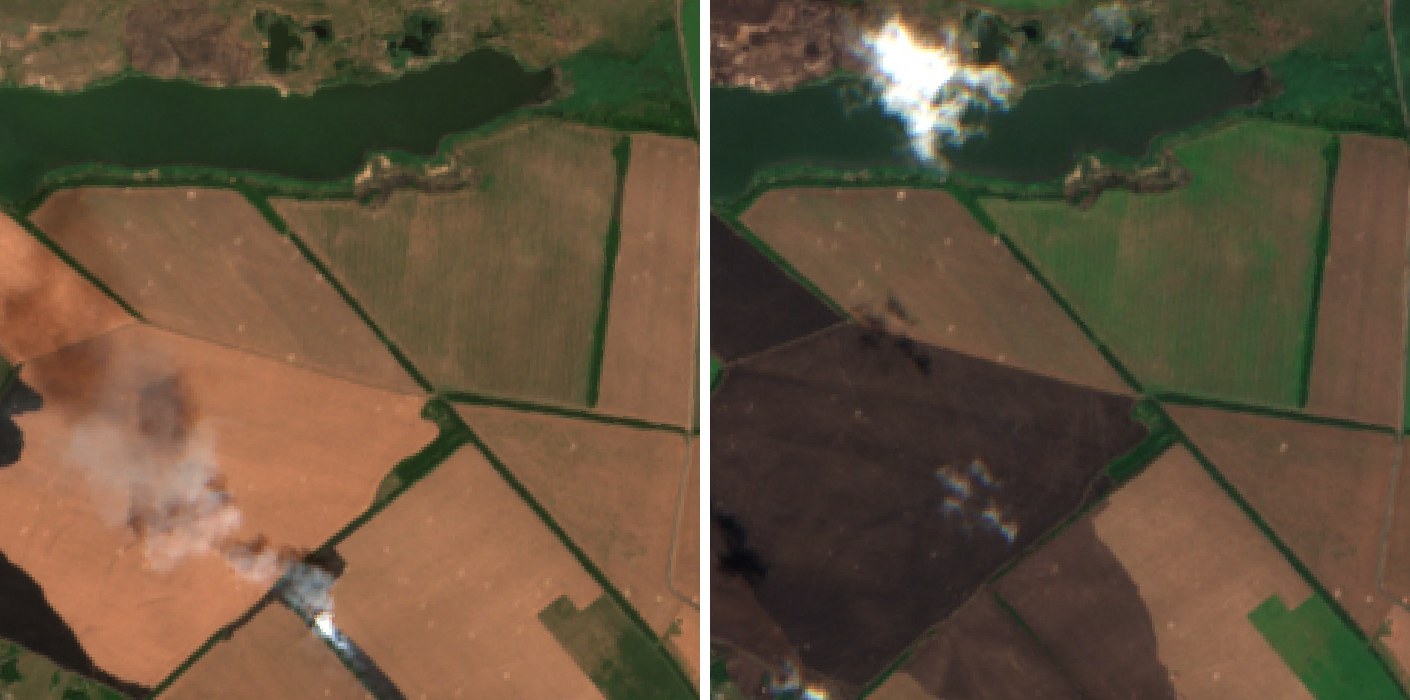
Sentinel-2 before and after images of one fire alert: smoke over a field, then a dark burn scar
When Symmetry Hides the State: Observability and Sensor Limits in a Partly Instrumented Water Network (in preparation)
Maria-Theodora Folina, et al.
Aalborg UniversityManuscript in preparation; from a COST InterCoML research visit to Aalborg University, 2026
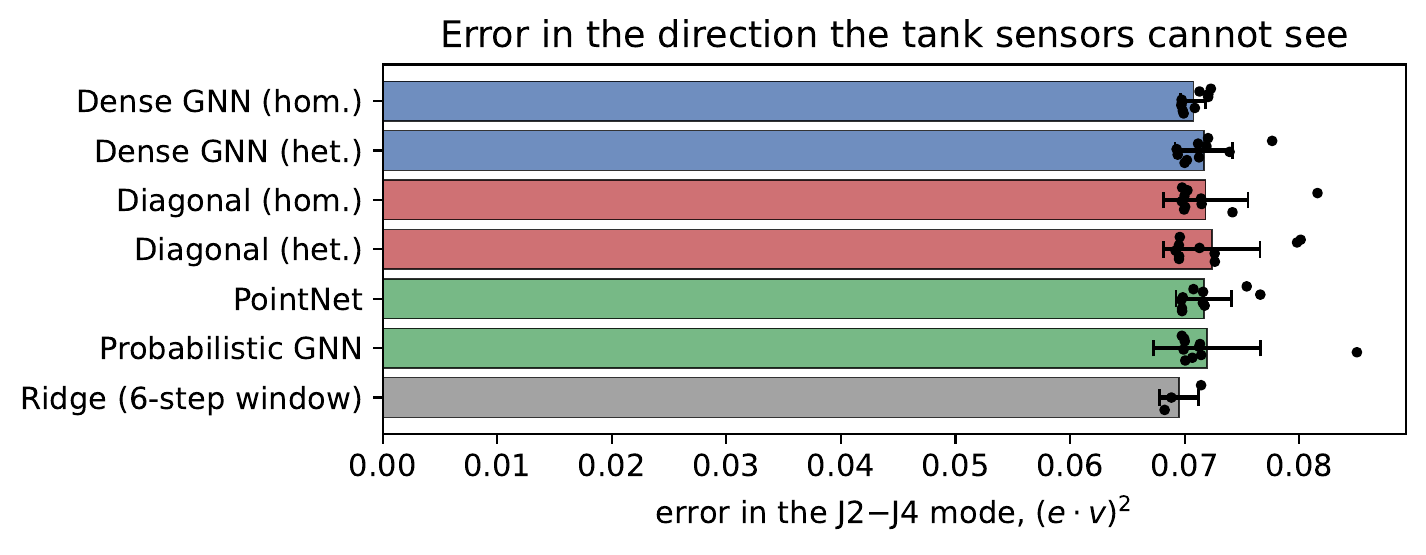
When only a few sensors watch a water network, a symmetry of the graph can hide whole state directions from every estimator. I classify these directions by the network's symmetry group, show that symmetry-breaking pipe perturbations restore observability only quadratically, and give a sensor-placement rule that removes them with at most log2|G| extra sensors. Ridge regression, Kalman and IMM filters and tuned recurrent and graph networks all stay at the prior-only error in the hidden direction, on a synthetic benchmark and on EPANET-engine simulations.
Water network graph with two instrumented tank branches and a symmetric loop of four unmeasured junctions
Every estimator stays at the same error in the J2-J4 direction the tank sensors cannot see
New Point-Cloud Architectures for Mesh-Invariant Operator Learning (in preparation)
Hefin Lambley, Maria-Theodora Folina, et al.
Imperial College LondonOngoing collaboration arising from LOGML 2026 (hosted at Imperial College London)
Studies discretization bias in functional autoencoders under nonuniform sampling and tests weighted, quadrature-based and Nyström-approximated aggregation.
Relative L2 error against mask ratio under quadrant and bottom-heavy masking

The complete lists are in the Talks and Publications tabs.

News

Research Experience

NCCR Automation Fellow (SNSF), ETH Zurich, Automatic Control Laboratory · Mar–Jun 2027 (incoming)
Group of Prof. John Lygeros; supervisor: Dr. Efe Balta. Software deployment and reproducibility as a control and optimisation problem with measurable guarantees.
Research Collaborator, with Dr. Hefin Lambley, following LOGML 2026 (hosted at Imperial College London) · Jul 2026 – present
Point-cloud functional autoencoders for mesh-invariant operator learning, with Nyström-approximated attention pooling on Navier–Stokes datasets.
Technical Student, CERN, Software Frameworks and Tools (EP-SFT) · Jan 2026 – Feb 2027
Shared software-build system for the LHC experiments; a Reproducibility Debt Index with bootstrap confidence intervals; CI/CD and reliability tooling in Python and C++.
Visiting Researcher, Aalborg University, Smart Water Infrastructures Laboratory · Aug 2026
Supervisor: Prof. Rafal Wisniewski. COST InterCoML research visit. Started with learned observers (GNN, PointNet) against Kalman baselines and stochastic Lyapunov stability criteria. This led to showing how graph symmetry hides parts of a water network's state from its sensors and comparing Bayesian sensor placement with Kalman, IMM and learned estimators in EPANET.
Research Collaborator, LIGO Scientific Collaboration, Missouri S&T · Jul 2025 – Jan 2026
Supervisor: Prof. Marco Cavaglia. Machine-learning pipelines to classify and localise transient noise in 500 GB+ of gravitational-wave detector data.
Research Assistant, International Hellenic University · Jul 2024 – Jan 2026
Air-sea CO2 flux inference from satellite and in-situ data; heritage-site degradation forecasting on the manifold of SPD matrices. Led work packages on the EU-funded digital-twin and sustainability projects IndustriSphere and Seek & Go. Supervised two data-analysis theses.
Research Assistant, Software and Data Engineering Laboratory, University of Macedonia · Jun 2024 – Jan 2026
Supervised two machine-learning theses as an undergraduate. EU projects: SKILLAB, AgriVision (CORTEX2), AgRibot and RAISE Suite.

Education

MSc, Systems Engineering and Technology, Democritus University of Thrace · 2025 – 2027
Thesis (at CERN): Systems Engineering Frameworks for Reproducible Software Stacks in LHC Computing Ecosystems
BSc, Computer Science, University of Macedonia · 2021 – 2025
GPA 9.2/10, valedictorian. Thesis: SmartESPD – Intelligent ML Extraction of Supplier Information (featured at the EU Joint Research Centre)

Talks & Conference Presentations

Conference presentations

Not Observed Is Not Calm: Where Open Sensors Go Blind and How to Verify Alerts for C2 (in preparation)
Maria-Theodora Folina
NATONATO ICMCIS 2027, Tartu, May 2027 (manuscript in preparation)  [alert-check viewer] [code]
An observability audit of satellite-derived fire alerts: the expected number of independent sensors able to see an event shows where open sensors go blind, with events leaving no thermal trace where it is lowest. Tested on 9,038 labelled alerts over Ukraine in two periods and with three event sources, and used in the Petrov Layer, an advisory verification layer with conformal thresholds and self-describing evidence records.
Excess of VIIRS detections over placebo dates by audit capacity, for UCDP, VIINA and ACLED events
Sentinel-2 before and after images of one fire alert: smoke over a field, then a dark burn scar
Maria-Theodora Folina
CERN48th CERN School of Computing, 2026 (lightning talk)  [slides] [CDS] [CDS internal note] Also available on the CERN Document Server.
Environment drift across compilers, operating systems, containers and CI/CD jobs silently affects reliability in LHC experiment software. I formulate a Reproducibility Debt Index from Gower-style mixed-variable distances, pairwise behavioral divergence and entropy-based consistency, with build-level bootstrap resampling and Wilson confidence intervals, and evaluate fragility and declared-versus-resolved configuration sensitivity on real CERN CI data.
Embeddings of the four hidden-debt software recipes in declared-recipe space and resolved-environment space, coloured by behavior divergence
Maria-Theodora Folina, Shantanusinh Parmar, Marco Cavaglia
CERNAI for Gravitational Waves Workshop @ CERN, May 2026  [poster]
LIGO transient noise bursts are mapped to a higher-dimensional point-cloud space (SNR, frequency, amplitude, Q). A PointNet-style classifier handles each frame while an LSTM follows the bursts in time, using Omicron triggers from the O3b run; part of ML pipelines that classify and localize transient noise in 500 GB+ of gravitational-wave detector data.
3D point cloud of LIGO glitches in frequency, phase and Q, coloured by SNR
Geometric AI for Climate-Resilient Heritage: Riemannian Trajectory Learning for Predictive Monitoring
Maria-Theodora Folina
Imperial College LondonLOGML 2026, Imperial College London (poster)  [poster]
Environmental change at 49 cultural heritage sites across Greece is fused from Sentinel-1, Sentinel-2, Sentinel-5P, ERA5-Land and terrain data in Google Earth Engine and represented as a trajectory on the manifold of symmetric positive definite (SPD) matrices. Log-Euclidean geodesic distances and second-order trajectory regularization capture cumulative environmental stress and latent dynamics for 12-month degradation forecasting (held-out R2 = 0.753); errors are largest in high-pressure episodes.
Map of Greece with predicted environmental pressure per heritage site
Giving a Voice to the Past: Predictive AI for Climate-Resilient Heritage and Community Well-being
Maria-Theodora Folina, Christina Agapitou
ACMACM-W womENcourage, Nice, 2026 (poster)  [abstract] [poster]
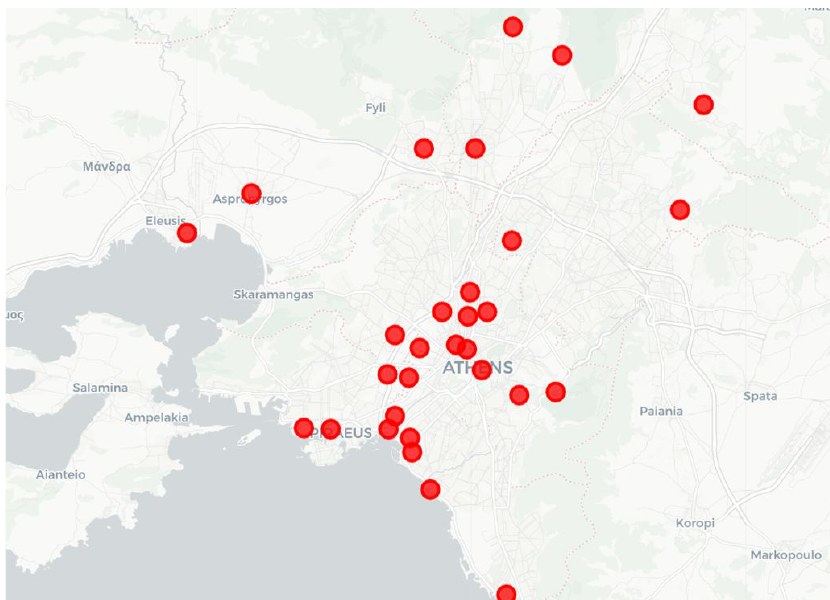
A hybrid CNN-LSTM trained in PyTorch on multi-sensor satellite data (Sentinel-1 ground displacement, Sentinel-2 vegetation and moisture, Sentinel-5P pollutants) produces ranked 12-month risk scores for 30 Athens heritage sites, moving heritage managers from emergency repair to preventive maintenance.
Map of the 30 Athens study sites
AI That Anticipates Decay: Predictive Satellite Intelligence for Climate-Resilient Heritage Cities
Maria-Theodora Folina, Christina Agapitou
Changing Cities 2026  [slides]
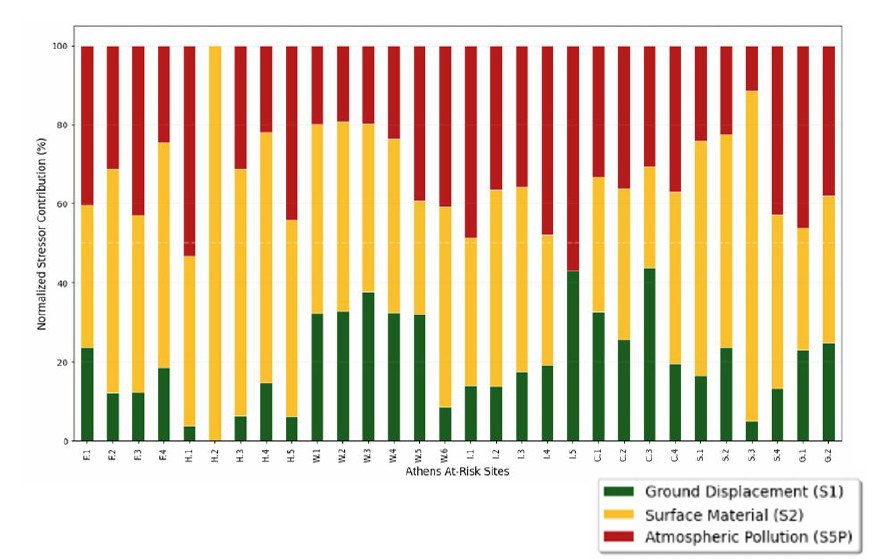
The Athens case study behind the nationwide work: a multi-hazard sensitivity analysis of the CNN-LSTM forecasts shows radar signals dominating in flood-prone, infrastructure-heavy areas and atmospheric pollution along transport corridors, supporting predictive maintenance and climate-resilient heritage cities.
Stacked bars of normalised stressor contribution per Athens site
Towards an Explainable AI Framework for Quantifying Air-Sea CO2 Fluxes: Multi-Sensor Satellite Data Fusion with Knowledge Graph Representation
Maria-Theodora Folina, Dimitrios Folinas, Ioannis Kostavelis
Copernicus Sentinel-3 and MetOp observations of sea-surface temperature, chlorophyll-a, height and wind are fused with sparse in-situ SOCAT pCO2 measurements on HPC to predict and explain air-sea CO2 flux over the North Atlantic, using XGBoost, SHAP attribution of the physical drivers and a Carbon Knowledge Graph. The 2023 marine heatwave case study identifies uncertainty in extreme events as the open gap.
SHAP summary plot of drivers of air-sea CO2 flux
Hovmöller diagram of pCO2 by latitude bin and month
AeroMLM: Accelerating MBSE in Aerospace: From Unstructured Data to Intelligent Models
Maria-Theodora Folina
ESAESA Academy MBSE 2025 – Best Student Poster Award  [poster]
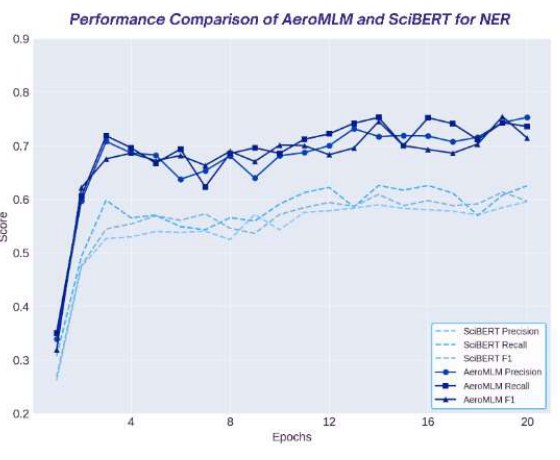
No public aerospace-requirements dataset existed, so I manually annotated one and ran domain-adaptive pretraining (DAPT) on SciBERT to extract engineering entities and relations (named entity recognition) from requirement PDFs, generating SysML/OpenMBEE models up to 10× faster than manual parsing.
Precision, recall and F1 of AeroMLM versus its baseline over training epochs
SmartESPD: Intelligent Extraction of Supplier Information from ESPD Documents
Maria-Theodora Folina
Presented at FreshMinds, a Joint Research Centre initiative that connects early-career researchers with EU policy actors on digital government; the 2025 edition covered AI and data governance and generative AI in the public sector.
Exploring Blockchain Applications in Logistics: Bibliometric Perspectives on Innovation, Sustainability and Cybersecurity
Maria-Theodora Folina, Ioannis Kostavelis
BEiNG-WISE Litochoro Training School, “Cybersecurity and Human Factors from an Industrial and Ethical Perspective”, 2025
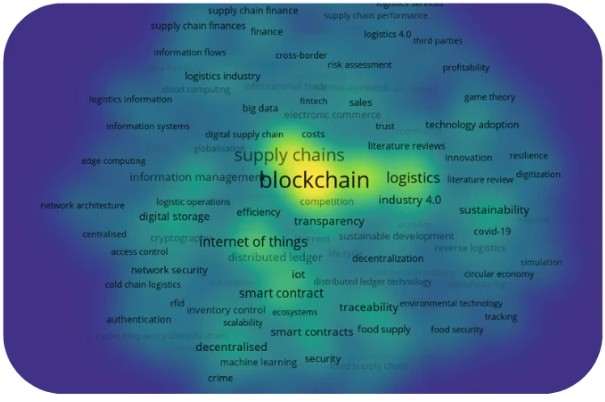
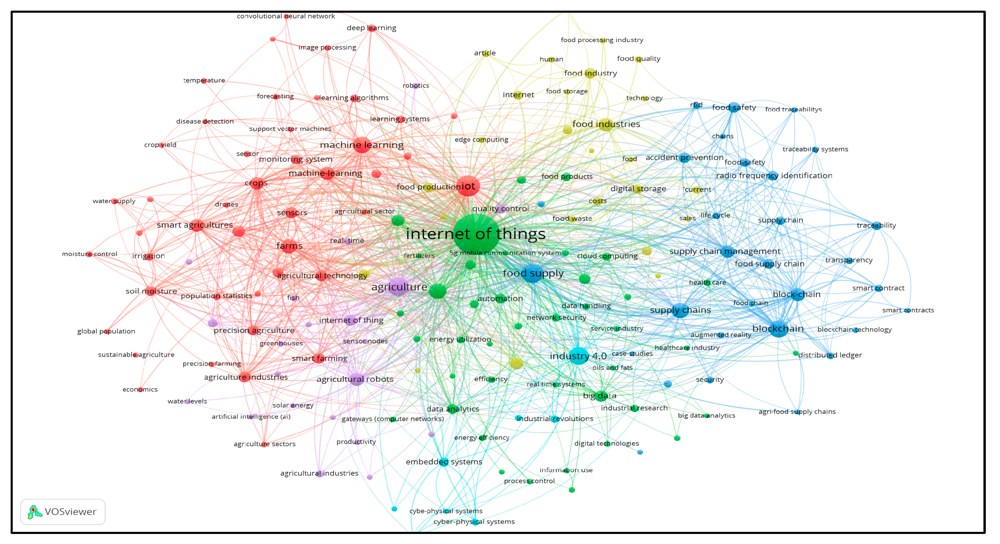
A VOSviewer bibliometric analysis maps global research on blockchain in logistics and supply chain management: rapid growth over the last five years, leading contributions from the United States, China and Europe, and recurring keywords such as traceability, transparency, smart contracts and Industry 4.0, with limited adoption due to scalability and regulatory barriers.
VOSviewer density map of keywords in blockchain and logistics research
Transforming Education: Artificial Intelligence Officer in Educational Organisations
Maria-Theodora Folina, Dimitrios Folinas, Dimitrios Mylonas, C. L. Giatakos
1st Scientific Conference on Artificial Intelligence in Education, University of Macedonia, pp. 386–400, 2024
Examines the role of an artificial intelligence officer in educational organisations.

Workshop talks

Hackathon Participation and Advanced Testing Insights
Maria-Theodora Folina
11th UCAAT: User Conference on Advanced Automated Testing, CERTH, Thessaloniki, Apr 2025
SKILLAB: Towards Advancing Skills of European Universities
Maria-Theodora Folina
2nd Plenary SKILLAB Meeting, CERTH, Thessaloniki, Feb 2025
Technical Advancements in SKILLAB Curricula Evolution
Maria-Theodora Folina
1st Joint SKILLAB Developer Meeting, University of Macedonia, Thessaloniki, Feb 2025
Countdown to IEEEXtreme: Training Session
Maria-Theodora Folina
IEEEIEEEXtreme Countdown Workshop, University of Macedonia, Thessaloniki, Oct 2024
IEEE UoM Student Perspectives on Digital Transformation in Education
Maria-Theodora Folina
BAUHAUS4EU European University Alliance Conference, University of Macedonia, Thessaloniki, Jun 2024

Publications

Machine learning & science

When Symmetry Hides the State: Observability and Sensor Limits in a Partly Instrumented Water Network (in preparation)
Maria-Theodora Folina, et al.
Aalborg UniversityManuscript in preparation; from a COST InterCoML research visit to Aalborg University, 2026
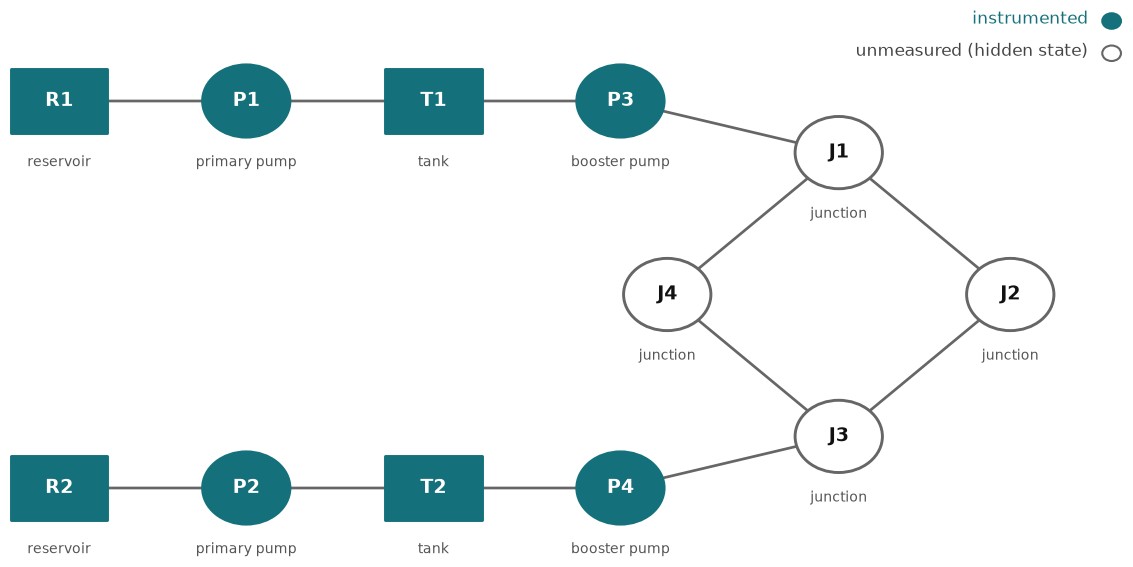
When only a few sensors watch a water network, a symmetry of the graph can hide whole state directions from every estimator. I classify these directions by the network's symmetry group, show that symmetry-breaking pipe perturbations restore observability only quadratically, and give a sensor-placement rule that removes them with at most log2|G| extra sensors. Ridge regression, Kalman and IMM filters and tuned recurrent and graph networks all stay at the prior-only error in the hidden direction, on a synthetic benchmark and on EPANET-engine simulations.
Water network graph with two instrumented tank branches and a symmetric loop of four unmeasured junctions
Every estimator stays at the same error in the J2-J4 direction the tank sensors cannot see
New Point-Cloud Architectures for Mesh-Invariant Operator Learning (in preparation)
Hefin Lambley, Maria-Theodora Folina, et al.
Imperial College LondonOngoing collaboration arising from LOGML 2026 (hosted at Imperial College London)
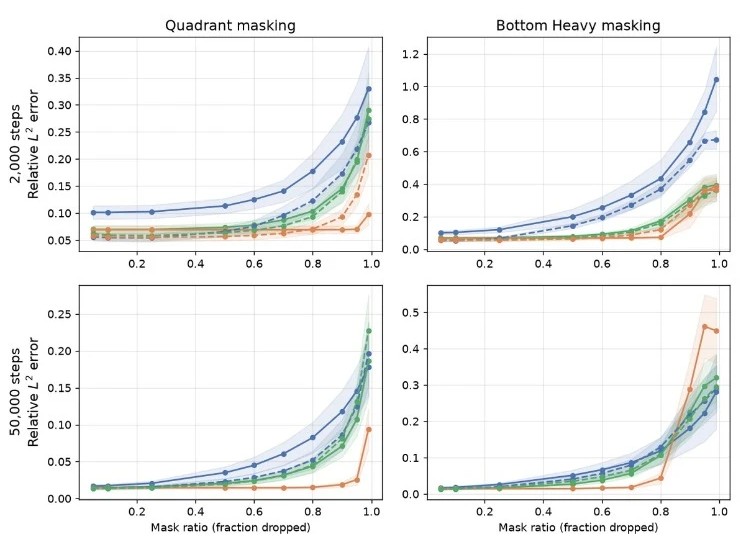
Investigates discretization bias in mesh-invariant neural operators under nonuniform point-cloud sampling, comparing Monte Carlo, Voronoi-weighted and kernel-based quadrature on two Navier–Stokes datasets. Functional autoencoders are extended with Nyström-approximated attention pooling and alternative function-to-vector operators (log-integral-exp, max), evaluated on reconstruction accuracy, numerical stability and computational cost with Holm-corrected paired tests.
Relative L2 error against mask ratio under quadrant and bottom-heavy masking, at 2,000 and 50,000 training steps
Shantanusinh Parmar, Marco Cavaglia, Kai Staats, Maria-Theodora Folina
APSAmerican Physical Society Global Physics Summit, 2026
A real-time localisation model built on a pretrained transformer for transient noise in gravitational-wave interferometers. It cross-references strain data with auxiliary channels (seismic, acoustic, electromagnetic), assigns each flagged segment a probability of transient noise and localises its origin, trained on previous observing runs.
Dimitrios Folinas, Konstantinos Rotsios, Maria-Theodora Folina
SpringerAgriculture 4.0: Towards a New Agri-Food Ecosystem, Springer, pp. 521–540, 2025
A global bibliometric review of Internet of Things research in agriculture, mapping research themes, trends and best practices.
E. Anastasiou, G. Ntakos, E. Kanakari, S. Bitsika, M. Gemtou, M. Katsaragakis, …, M.-T. Folina, et al. (22 authors)
ElsevierSmart Agricultural Technology, 101521, 2025
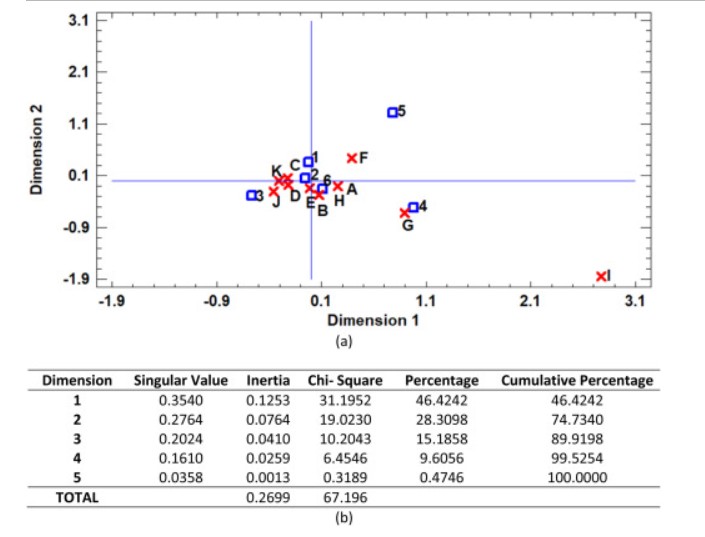
A review of robotics and extended reality (XR) applications in agriculture, mapping research themes with correspondence analysis.
Correspondence analysis plot with inertia table
C. Volioti, V. Rossidis, D. Perperidou, N. Nikolaidis, M.-T. Folina, G. Mygdakos, A. Ampatzoglou, A. Chatzigeorgiou
EuroXR 2025, Graz, Austria (poster)
Combines extended reality with farm management information systems to give farmers data-driven tools, with a HoloLens 2 version for spatial data visualisation and a mobile version; co-developed within the EU-funded CORTEX2 project.

Other collaborations

Maria-Theodora Folina, Maria Gastounioti, Spyridon Koureas, Dimitrios Folinas
Clinical Diabetology 15(1), 24–32, 2026
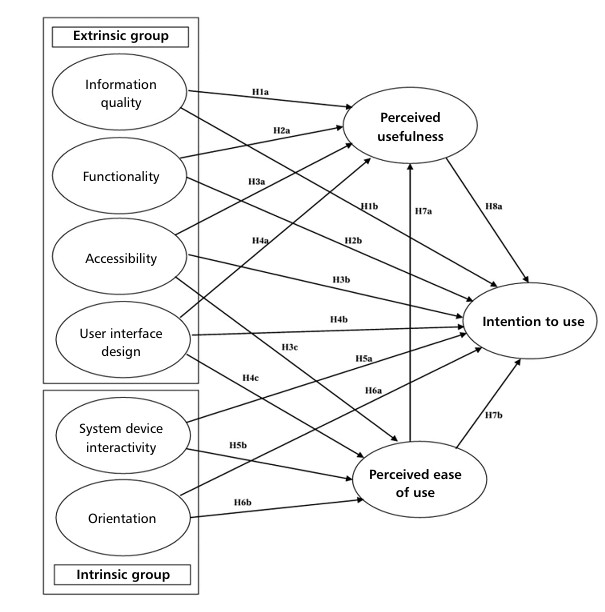
A revised Technology Acceptance Model (TAM) tests extrinsic factors (information quality, functionality, accessibility, user interface design) and intrinsic factors (system device interactivity, orientation) as drivers of perceived usefulness, perceived ease of use and intention to use AI-powered wearable diabetes devices, in a survey of 179 individuals with diabetes in Greece.
Revised technology acceptance model with extrinsic and intrinsic factors predicting intention to use
Dimitrios Folinas, E. Fakou, A. Christou, Maria-Theodora Folina, Dimitrios Mylonas
MDPIBusinesses 6(3), 38, 2026
A questionnaire study of 1,252 Millennial and Gen Z consumers in Greece finds that communication quality, delivery execution and problem resolution raise satisfaction with third-party logistics, longer lead times lower it, and a positive delivery experience increases the intention to keep shopping online.
AI-Enabled Digital Twins and the Transformation of Industry 5.0 Skills Development: A University-Industry Learning Case Study
Christos Achillas, R. Ntones, Maria-Theodora Folina, Dimitrios Aidonis
International Sociological Association Midterm Conference, Education and AI, 2026
A university-industry learning case study on how AI-enabled digital twins support Industry 5.0 skills development.
K. Rotsios, D. Folinas, C. Mouchtari, A. Andreou, T. Fotiadis, M.-T. Folina, A. Gasteratos
MDPIFoods 14(4), 575, 2025
A bibliometric analysis of IoT in food packaging (2010–2024) combined with a technology acceptance model (TAM) survey of 162 industry representatives, examining which factors drive the adoption of IoT applications in the food sector.
VOSviewer keyword network of IoT in food packaging research
C. Agapitou, A. Sabazioti, P. Bouchoris, M.-T. Folina, D. Folinas, G. Tsaramiadis
MDPITourism and Hospitality 6(4), 207, 2025
Applies the UTAUT2 model to Greek tourists: performance expectancy, hedonic motivation and perceived innovativeness increase the intention to use AI chatbots, while inconvenience, habit and difficulty of use reduce it.
Dimitrios Folinas, Konstantinos Rotsios, Christina Agapitou, Maria-Theodora Folina, Thomas Fotiadis
MDPIRecycling 10(6), 222, 2025
28 semi-structured interviews with producers, retailers, recyclers, logistics actors, consumer representatives and regulators identify four interdependent barriers to Greece's upcoming deposit refund system: access to return points, fragmented governance, weak supply-chain coordination and low consumer participation.
Dynamic Pricing in the Energy Sector: A Systematic Review of Models and Research Trends
D. Folinas, A. Mavidis, G. Kostavelis, N. Tsolakis, M.-T. Folina, C. Achillas, D. Aidonis
14th International Research Meeting in Business and Management, 2025  [proceedings]
A PRISMA systematic review of 1,279 Scopus-indexed publications (2017–2025) with bibliometric mapping finds two dominant logics, economic optimisation and systems engineering, and builds a taxonomy of pricing schemes comparing efficiency, scalability and user acceptance, including machine-learning, game-theory and agent-based approaches.
Exploring the Acceptance of AI-Based Content Management Systems Among Employees of the Greek Public Administration
S. Koureas, M.-T. Folina, D. Folinas
14th International Research Meeting in Business and Management, 2025
Examines the acceptance of AI-based content management systems among employees of the Greek public administration.
The Last Mile That Matters: Measuring the Performance of E-Commerce Deliveries
E. Fakou, A. Christou, D. Folinas, D. Mylonas, M.-T. Folina
26th Panhellenic Logistics Conference (EELBE), 2025
Measures the performance of e-commerce deliveries from the consumer's point of view.
Eleni Poulaki, Chrysa Agapitou, Dimitris Folinas, Konstantinos Rotsios, Maria-Theodora Folina
International Conference on Applied Economics and Finance (ICOAEF-XIII), Thessaloniki, April 2025
A quantitative survey of 359 consumers finds that a healthy lifestyle, particularly diet and exercise, is related to consumer behavior, with implications for marketing healthy products.
Konstantinos Kokkinidis, Maria-Theodora Folina
International Research Journal of Science, Technology, Education and Management 4(2), 1–13, 2024
A literature survey of how augmented reality is used as an educational tool in higher education.
Maria-Theodora Folina, Emmanouil Stiakakis
International Research Journal of Economics and Management Studies 2(2), 72–80, 2023
A study of how Generation Z is changing the rules of e-commerce.
Evaluation of an Educational Intervention in VET Students for Reinforcing Knowledge in Logistics Using Artificial Intelligence
D. Folinas, D. Mylonas, M.-T. Folina, A. Mavidis, A. Christou
1st Scientific Conference on Artificial Intelligence in Education, University of Macedonia, pp. 401–419, 2024
Evaluates an AI-supported educational intervention that reinforces logistics knowledge in vocational education and training (VET) students.

Awards, Grants & Programmes

2026Research Award, Special Account for Research Funds (ELKE), Nov 2026. Awarded for the 2025 article “Applications of Robotics and Extended Reality in Agriculture: A Review” in Smart Agricultural Technology (Elsevier; journal in the 85th percentile, JUFO level 1).
2026Hellenic State Scholarships Foundation (IKY) Travel Grant, University of Macedonia, Oct 2026. Travel grant for the valedictorian award ceremony.
2026COST Action CA24136 Short-Term Scientific Mission (STSM) Grant, Interactions between Control Theory and Machine Learning (InterCoML), hosted by Aalborg University, Aug 2026. Project: “Control-Theoretic Stability and Scientific ML for Resilient 5G/6G Power Infrastructure”, on Lyapunov stability and LSTM-Pointcloud architectures for signal detection and reliability under radio uncertainty.
2026ACM-W womENcourage Scholarship Grant, 13th edition. Conference grant, one of 50 recipients selected globally; poster presentation with Chrysa Agapitou.
2026Heidelberg Laureate Forum Intercultural Science-Art Exhibition. My artwork was selected and featured among 17 paintings in the Gestalt exhibition at Heidelberg Castle, Germany.
2026Heidelberg Laureate Forum Young Researcher, 13th edition. Selected as one of 200 Young Researchers globally to attend the interdisciplinary forum in mathematics and computer science, supported by an HLFF travel grant.
2026CERN School of Computing, 48th edition. Top performer in the final examination (1st of 64) and recipient of a CERN grant; lightning-talk speaker.
2026London Geometry and Machine Learning Summer School (LOGML), Imperial College London. One of 5 MSc students selected among 80 participants globally; poster presenter.
2026NATO STO Summer School on 5G and Beyond Resilient Communications for Defence (IST-247). One of 40 participants selected globally.
2026IKY Excellence Scholarship (for 2025), Hellenic State Scholarships Foundation. Recognized as valedictorian and awarded the scholarship by the State Scholarships Foundation (IKY) as top graduate in Computer Science and Technology, University of Macedonia, GPA 9.19/10.
2025ESA Academy Training: Disruptive Innovation and Commercialisation in Earth Observation (DICEO), Dec 2025. One of 30 students selected by the European Space Agency. Contributed to a team: led a 5-member team on fusing Earth-observation streams for climate-resilient infrastructure.
2025ESA Model-Based Systems Engineering (MBSE) 2025. Best Student Poster Award for AeroMLM, supported by ESA Academy, and an ESA Conference Student Bursary as one of 4 students selected to attend and present. ESA
2025European Commission Joint Research Centre, FreshMinds 2025. Seminar presentation on SmartESPD, intelligent extraction of supplier information from ESPD documents.
2025COST Action CA22104 ITC Training School Grant, Behavioral Next Generation in Wireless Networks for Cyber Security (BEiNG-WISE), Aug 2025. INRIA & COST ITC travel grant, one of 2 recipients in Greece.
2025AIDA Symposium and Summer School on AI/ML Cutting Edge Trends (AICET2025), Jul 2025. AIDA grant as a fully funded participant; ranked 1st among applicants.
2025CityMinds EU Summer School on Smart Cities, CERTH and EIT Urban Mobility, Jun–Jul 2025. Grant as a fully funded participant, one of 50 selected globally.
2024MRC Robotics Olympiad. Global winning team with HERON UoM Robotics; Best Business Idea.
2023HUAWEI Seeds for the Future (SFTF). Panhellenic winning team, honoured at the closing ceremony in Athens; featured in national news.
2023Microsoft Dynamics Academy, TeKnowledge, May 2023. Microsoft-funded scholarship for a training programme on Microsoft Dynamics.

Teaching & Supervision

Service & Volunteering